
Command & Control Center Development
Centralized Monitoring for Real-Time Security Operations
Key Capabilities
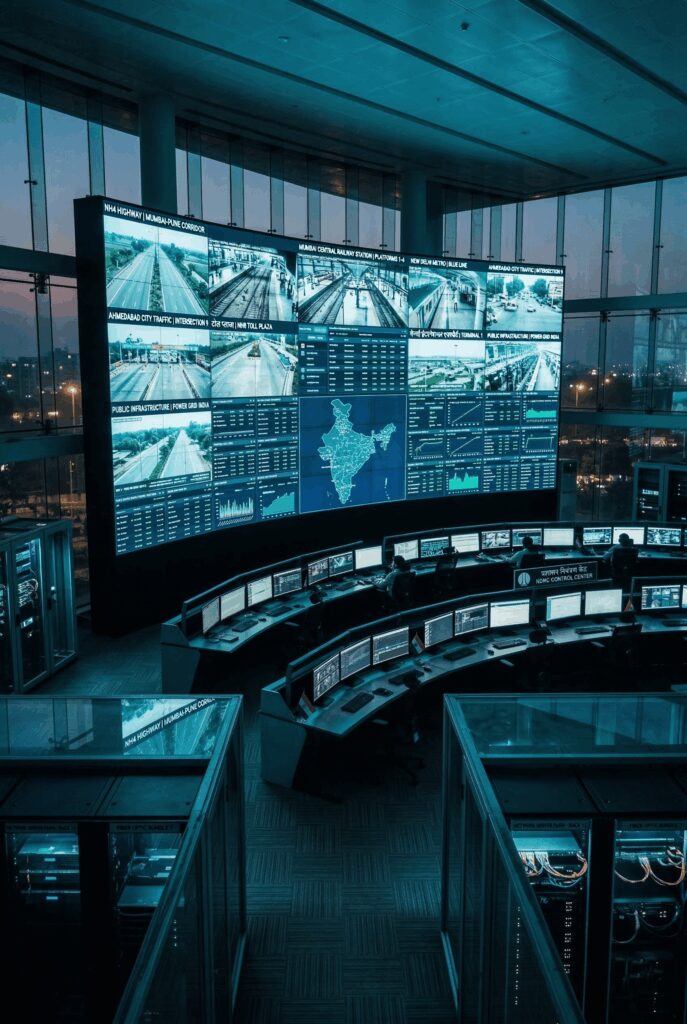
Command Center Architecture & Layout Design
Planning the physical and technical layout of monitoring centers including operator workstations, video walls, and system infrastructure.
Video Wall & Display System Deployment
Installation and configuration of large-scale display systems for real-time monitoring of multiple surveillance feeds.
Monitoring Workstation Setup
Deployment of operator consoles, monitoring software, and control interfaces for surveillance management.
Centralized Surveillance Management
Integration of video feeds, analytics, and system alerts into a centralized monitoring platform.
Incident Monitoring & Response Systems
Implementation of tools and workflows that support real-time incident detection, alerting, and response coordination.
Data Visualization & Operational Dashboards
Development of dashboards that provide system status, alerts, and operational insights for monitoring teams.
Command Center System Integration & Commissioning
Testing, configuration, and activation of command center systems to ensure reliable real-time operations.
FAQ's
Command and control center development covers designing the physical space, integrating surveillance feeds and communication systems, and building the technical infrastructure needed to support centralized operations — the build phase, as distinct from day-to-day monitoring once it’s operational.
A security operations center is designed around how operators need to view, prioritize, and act on surveillance and alert data — factoring in display layout, system access, and communication tools before the space is built out.
Control room development includes integrating video walls, workstation systems, and communication infrastructure so operators can monitor and coordinate response from a single environment.
A mission-critical command center is built with redundancy and reliability considerations — backup power, failover systems — since downtime in this environment can directly affect an organization’s broader security or operational response.
Implementation covers integrating all surveillance, communication, and monitoring systems into the physical command center and testing that they function together before operational handover.